
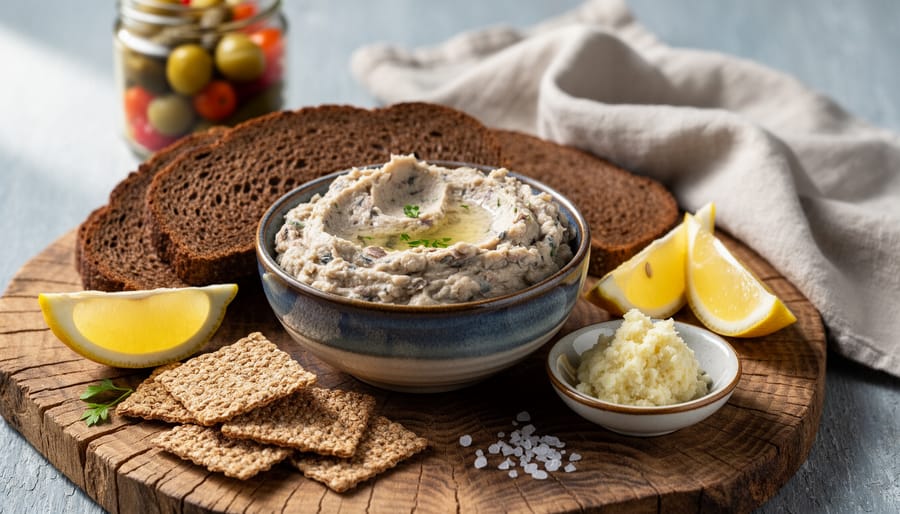
How to Make Smoked Mackerel Pâté in 15 Minutes (No Cooking Required)
Smoked mackerel pâté is a no-cook spread you can make in about 10 minutes with a bowl, a fork, and five or six pantry ingredients. Flake the fish, beat it with cream cheese, a little crème fraîche, lemon juice, and horseradish, season, chill, and it’s ready to spread. No cooking, no special equipment, and beginners get great results on the first try.
The method works because hot-smoked mackerel is already cooked, rich in oil, and full of flavor. All you’re doing is bringing it together into something creamy enough to spread on dark bread. That’s exactly how it shows up on a German Brotzeit board, the casual, unfussy snack spread of cold cuts, cheese, pickles, and rye that’s eaten in Bavarian beer gardens and kitchens alike. Smoked fish spreads fit right in beside the Leberwurst and radishes.
Below you’ll find the tools, the ingredients, a few food safety points worth knowing, the steps in order, and how to tell when the texture is right. Storage and freezing answers come at the end.
Smoked Fish on the German Table: Why This Pâté Fits Right In
Walk through almost any fish market or harbour town along Germany’s North Sea and Baltic coasts and you’ll catch the scent of woodsmoke drifting from a nearby Räucherei, a smokehouse. Räucherfisch, or smoked fish, has long been part of everyday eating there. Räucherforelle (smoked trout), Bückling (a whole smoked herring), and Makrele (mackerel) are all familiar sights on a market counter.
The way people eat it is simple. A fillet or half a fish arrives with a slice of Schwarzbrot, the dense, dark rye bread, or a hearty Vollkornbrot made with whole grains. A dab of mustard or a spoonful of sharp horseradish (Meerrettich) cuts through the richness of the fish. Nothing fancy, and nothing needs to be.
You can see the same spirit in the Fischbrötchen, the beloved bread-roll sandwich sold at harbourside stands, and in the Brotzeit, the casual “bread time” spread of breads, cold cuts, cheeses, and pickles shared at a relaxed table. Both are about good ingredients served without fuss.
That’s exactly where this pâté belongs. Flaked smoked mackerel, creamy and lightly tangy, turns that same pairing of fish, dark bread, and a little heat into something you can spread, scoop, and share. It’s a friendly home-kitchen cousin to those coastal traditions, easy enough for a weeknight snack and tidy enough to set out when friends drop by.
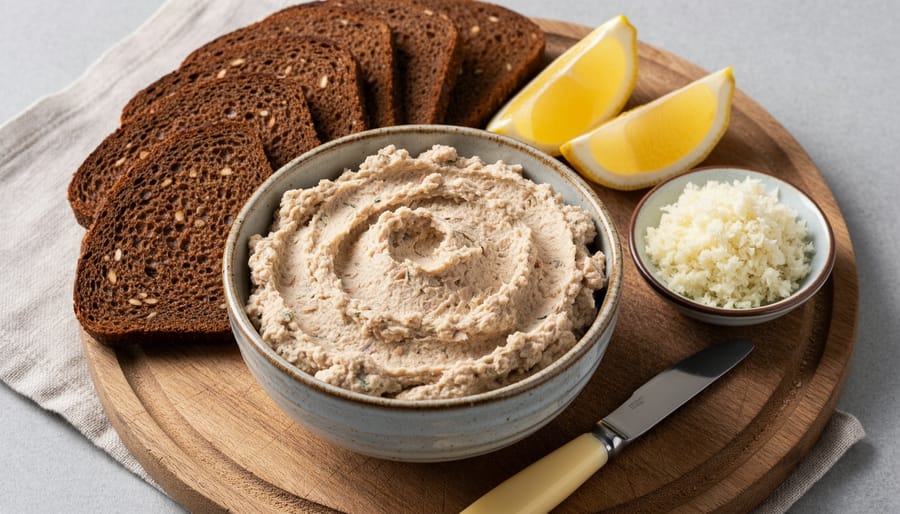
What You’ll Need: Ingredients, Tools, and Smart Substitutions
Choosing the Right Smoked Mackerel
Start with the fish itself. Good smoked mackerel looks firm and glossy, with a golden-brown skin and flesh that holds together when you press it. It should smell pleasantly smoky, never sour, sharp, or like ammonia. If you’re buying vacuum-packed fillets, check that the seal is intact, with no leaking liquid or puffed-up packaging, and read the use-by date before it goes in your basket. At a deli or fishmonger counter, ask when the fish came in and how it has been stored.
You’ll usually find two styles. Plain smoked mackerel gives you a mellow, buttery smokiness that lets the lemon and herbs shine through. Peppercorn-crusted fillets bring a bit of heat and a spicy bite, which is lovely if you like your pâté bold. Since the pepper is already doing some of the seasoning, go easy on extra pepper at the mixing stage.
Ingredient Swaps and German-Inspired Variations
Once you have the basic method down, the pâté is easy to bend toward your pantry or your taste. For a lighter, tangier spread, swap the cream cheese for Quark, the fresh German-style curd cheese found in many Canadian delis and larger grocery stores. Crème fraîche works too and gives a softer, silkier texture. If the mixture loosens, use half cream cheese and half Quark.
For herbs, fresh dill is the classic partner for smoked fish, while chives bring a gentle onion note. A teaspoon of prepared horseradish (Meerrettich) adds a pleasant bite, and Dijon mustard gives a milder, rounder heat. Chopped capers lend a briny pop that cuts through the richness.
To nod to German flavours, try a small pinch of crushed caraway seed, which pairs beautifully with dark rye. Add extras a little at a time and taste as you go, since the smoked fish already brings plenty of salt.
Before You Start: Food Safety and Handling Warnings
Smoked fish is a ready-to-eat product, but a few habits keep this no-cook pâté safe and pleasant. Start cold: keep the mackerel in the fridge until you’re ready to flake it, and work with clean hands, a clean bowl, and freshly washed utensils. Check the use-by date before you open the pack, and stick to the storage window printed on the label.
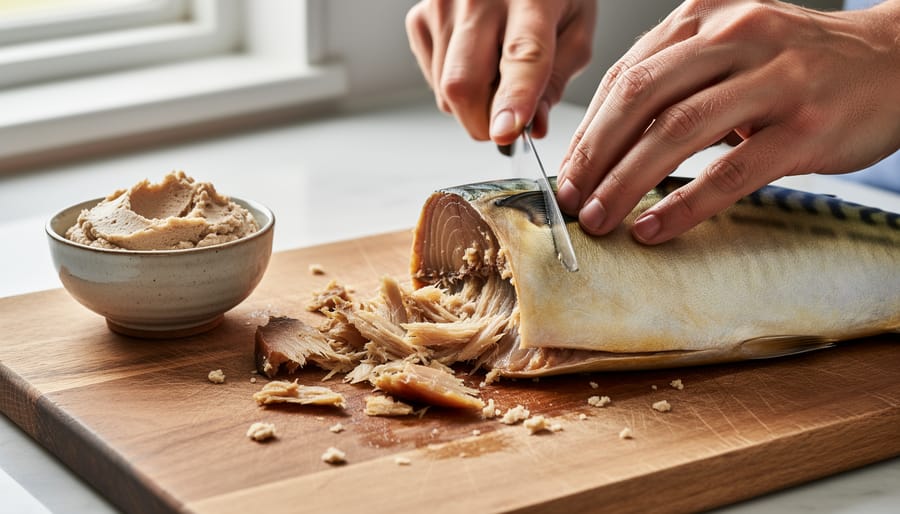
Pin bones are the other thing to watch. Run your fingers slowly along each fillet and pull out any thin, needle-like bones you find. Doing this by touch matters more than by eye, since they hide easily in the flesh.
Health agencies treat smoked fish with extra caution for certain groups. Because smoked fish is high risk for listeria, pregnant people, young children, older adults, and anyone with a weakened immune system are generally advised to avoid cold-smoked fish or to follow local guidance, such as Health Canada’s, before serving it. If you’re cooking for someone in these groups, check with their doctor first.
When in doubt, throw it out. A fresh, smoky aroma is exactly what you want before moving on.
Step-by-Step: Making Smoked Mackerel Pâté from Start to Finish
Rustic or Silky? Choosing Your Texture
Texture is where this pâté lets you make it your own, and both routes are easy.
For the rustic version, use a fork and a sturdy bowl. Mash the flaked mackerel with the softened cream cheese and lemon until it holds together but still has visible flakes of fish. This chunky style suits a Brotzeit spread, where it sits happily next to pickles, radishes, and a hunk of Schwarzbrot. It also gives you more bite, so the smoky flavour feels bolder.
For the silky version, pulse everything in a food processor in short bursts. Stop as soon as it looks creamy, since over-processing can turn it pasty and a little gluey. Smooth pâté spreads neatly on crackers, fills small ramekins nicely, and works well for a dinner party where you want a tidy, polished look.
If you’re unsure, start rustic. You can always blend a spoonful or two more later, but you can’t put the flakes back.
How to Tell It’s Right, and What to Do Next
Before the pâté goes on the table, give it a proper taste test. Spread a little on a piece of bread and check it against this list:
– Balance: the smoke should come through first, followed by a bright lemony tang that keeps it from tasting heavy.
– Texture: it should hold its shape on a knife yet spread easily without tearing the bread.
– Bones: run a fork through it and check again, since pin bones are easy to miss.
– Flavour: it should taste fresh and clean, never fishy or sour.
If it tastes too salty, stir in a spoonful more cream cheese or Quark to mellow it. Too dry? Loosen it with a little crème fraîche or a squeeze of lemon. If it seems bland, add more horseradish, a pinch of black pepper, or extra zest, tasting after each addition.
Chilling for at least an hour lets the flavours settle. Store the pâté in an airtight container in the refrigerator and eat it within a couple of days, or follow the use-by guidance on your fish packaging, whichever is shorter.
For serving, think Brotzeit. Spread it thickly on Schwarzbrot or pumpernickel, then add cucumber slices and a few pickled onions for crunch and acidity. A glass of crisp German Riesling or a light pilsner is a lovely match, since both cut through the richness without overpowering the smoke.
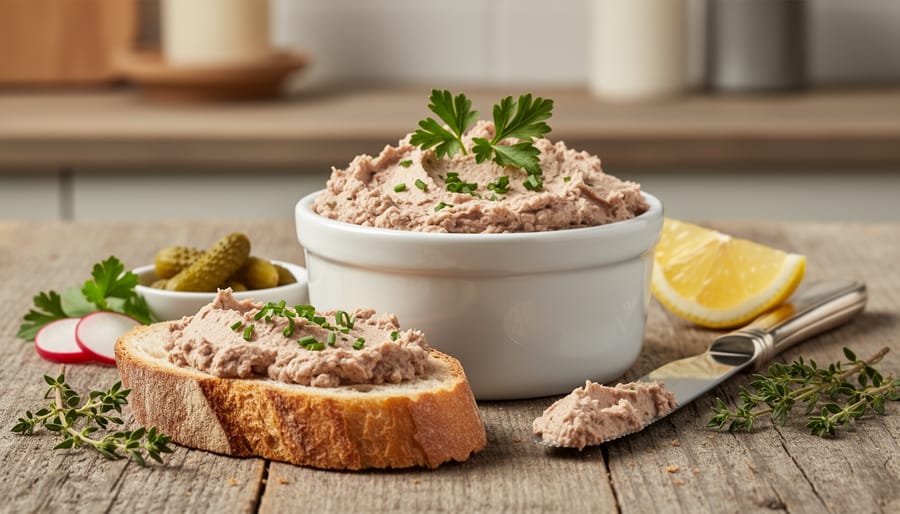
Smoked Mackerel Pâté FAQs
Can I freeze smoked mackerel pâté?
You can, but the texture usually turns slightly grainy once thawed because cream cheese doesn’t freeze well. If you do freeze it, use an airtight container, thaw it overnight in the fridge, and give it a good stir before serving.
Can I use trout or salmon instead of mackerel?
Yes. Smoked trout (Räucherforelle) gives a milder, slightly sweeter pâté, and hot-smoked salmon works too. Mackerel is oilier and more robust, so you may want a little extra lemon with the gentler fish.
Do I need a food processor?
No. A fork and a bowl give you a rustic, chunky spread that suits Brotzeit-style serving well. A processor is only needed if you want a silky, smooth texture.
How long does it keep, and what should I serve it on?
Stored in an airtight container in the fridge, it is generally best eaten within a couple of days, and always within the use-by guidance on your fish packaging. Dark breads like Schwarzbrot or pumpernickel are the classic match, since their earthy flavour balances the smoke.
Because it needs no cooking and tastes better after resting, this pâté is a handy make-ahead appetizer. Prepare it a few hours before guests arrive, keep it chilled, and bring it out about ten minutes before serving so it spreads easily.
That’s the whole story: flaked smoked mackerel, creamy tang, a squeeze of lemon, and about fifteen minutes with no stove in sight. Now spread it thick on dark rye, add cucumber and pickled onions, and serve it Brotzeit-style with a crisp Riesling or a light pilsner.
If this has you craving more, explore the best German restaurants across Canada, or try a German-style breakfast. Fans of Belgian waffles will love this waffle recipe too. Guten Appetit!