
7 Best Nearby German Restaurants in Canada, Ranked for 2026
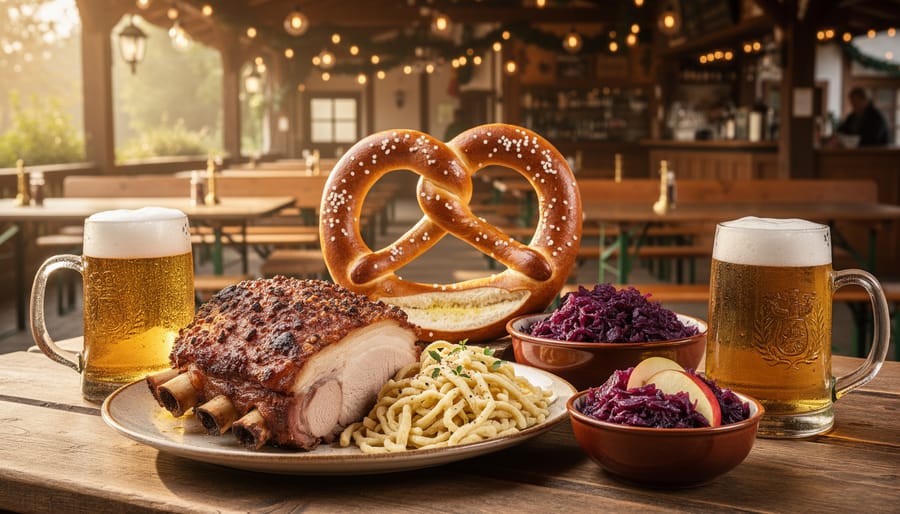
Craving the hearty flavors of Schweinshaxe, Spätzle, or a perfectly poured Weißbier? Seven standout German restaurants across Canada deliver authentic Alpine and Bavarian cuisine, from family-run biergartens serving traditional Sauerbraten to modern gastropubs reimagining Schnitzel with local ingredients. Each establishment on this list has been vetted for culinary authenticity, ambiance that transports you to Germany, and signature dishes worth the drive.
Finding a truly authentic German restaurant requires more than checking online reviews. The best spots balance tradition with accessibility, employing chefs who either trained in Germany or learned recipes passed down through generations. You’ll notice the difference immediately in details like house-made Spätzle with proper texture, slow-roasted pork hock with crackling skin, and imported German beers served at correct temperatures in traditional glassware.
The restaurants featured here span Vancouver to Toronto, each bringing something distinct to Canada’s German dining scene. Some occupy century-old buildings that once housed German social clubs, their walls lined with vintage steins and photographs of the old country. Others take a contemporary approach, pairing classic preparations with Canadian ingredients like Ontario pork or Fraser Valley duck. What unites them is a commitment to recipes and techniques that honor German culinary heritage, whether that means simmering Red Cabbage with apples and spices for hours or hand-stretching Apfelstrudel dough until it’s paper-thin.
How We Ranked These Nearby German Restaurants

Choosing which German restaurants to feature and how to rank them required a methodical approach that goes beyond simply listing the closest options. We wanted to ensure that each restaurant on this list delivers an authentic, memorable dining experience worthy of your time and travel, no matter where you are in Canada.
Our evaluation process centered on six core criteria:
- Geographic accessibility, restaurants located in or near major urban centers with convenient transit, parking, and clear visibility
- Menu authenticity, adherence to traditional German recipes, use of imported specialty ingredients, and regional dish representation
- Atmosphere and cultural immersion, décor, music, service style, and overall ambiance that transport diners to Germany
- Chef credentials and culinary expertise, professional training, family heritage, and demonstrated knowledge of German cooking techniques
- Customer feedback and reputation, consistent positive reviews, community standing, and repeat patronage over time
- Value proposition, fair pricing relative to portion sizes, quality, and overall experience
To gather accurate information, we conducted phone interviews with head chefs and owners at each establishment, asking about their sourcing practices, recipe origins, and culinary philosophy. Where possible, we visited locations to sample signature dishes and observe service firsthand. We also cross-referenced online reviews with local German-Canadian community recommendations to identify restaurants with genuine cultural roots rather than surface-level theming.
Geographic diversity mattered, too. We deliberately selected restaurants across multiple provinces so readers in Vancouver, Toronto, Montreal, Calgary, and other cities could find a nearby option without identical recommendations clustered in one region. The final rankings reflect which establishments excelled across all criteria, balancing authenticity with accessibility and value with cultural depth.
1. Black Forest Inn, Vancouver, BC: Old-World Charm Meets West Coast Freshness
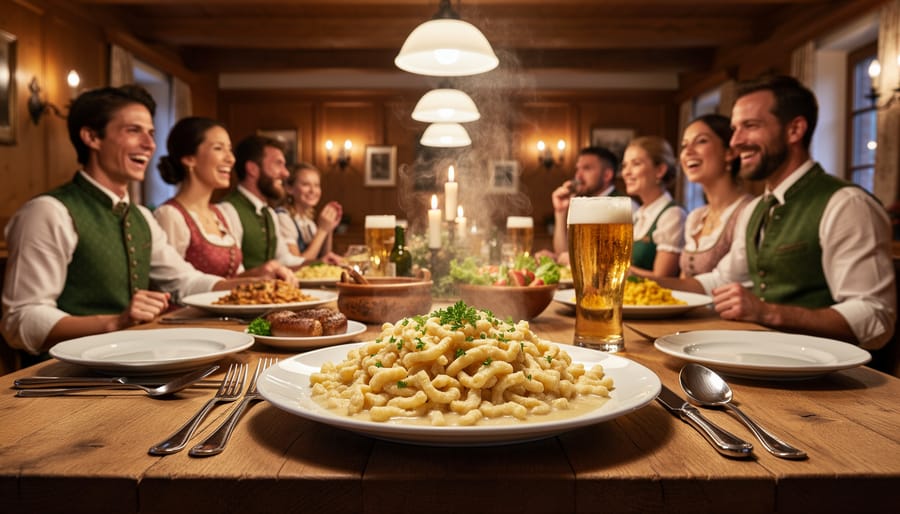
Tucked along Commercial Drive in Vancouver’s vibrant East Village, Black Forest Inn has earned its spot as Canada’s best nearby German restaurant through an unwavering commitment to Swabian tradition and impeccable ingredient sourcing. For 35 years, the Müller family has served dishes that taste like they’ve been lifted straight from their ancestral Schwäbische Alb village, because, in many cases, they have. Third-generation owner Stefan Müller still uses his grandmother’s handwritten recipe book, its pages stained with decades of schmalz and memories.
The restaurant’s signature spätzle exemplifies this dedication. Each batch is hand-scraped to order, creating those irregular, cratered surfaces that catch sauce like no machine-pressed version can. Pair them with the rotating seasonal game offerings, wild boar ragout in autumn, venison medallions through winter, and you’ll understand why locals plan their visits around the menu’s quarterly shifts. The Jägerschnitzel, pounded thin and draped in a mushroom cream sauce that balances earthiness with subtle white wine brightness, has converted countless schnitzel skeptics.
Step inside and the dark wood paneling, lace curtains, and cuckoo clock collection transport you to a Black Forest Gasthaus, yet West Coast touches appear in unexpected places. Local Dungeness crab occasionally finds its way into the potato salad. Fraser Valley pork supplies the house-made bratwurst. This isn’t fusion for fusion’s sake, it’s a family honoring their roots while embracing their adopted home, exactly what makes a German restaurant nearby worth the drive across town.
2. Edelweiss Tavern, Hamilton, ON: Bavaria in the Heart of Steel City
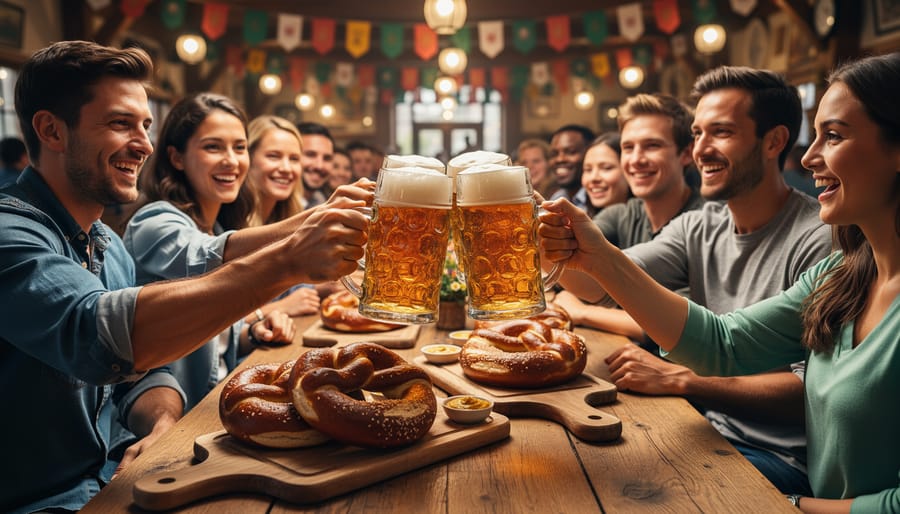
Edelweiss Tavern earns second place for bringing the raucous energy of a Munich beer hall to downtown Hamilton. The moment you step through the door, the din of conversation, clinking steins, and accordion music transports you across the Atlantic. This nearby German restaurant has cultivated a fiercely loyal following since opening in 2012, thanks to an exceptional beer program and schnitzel so crisp it audibly shatters under your fork.
The beer list reads like a tour through Germany’s brewing regions. Twenty-seven taps pour Bavarian lagers, Cologne kölsch, and seasonal doppelbocks alongside a rotating selection of bottled imports that changes monthly. Owner Klaus Brenner imports directly from family breweries in Franconia, ensuring freshness that chain restaurants can’t match. On Friday nights, half-liter steins fill communal oak tables where strangers become friends over shared pretzel platters.
The schnitzel menu alone spans eight variations. The jägerschnitzel arrives under a blanket of rich mushroom gravy, while the zigeunerschnitzel gets a tangy bell pepper sauce that balances the fried pork’s richness. Each cutlet gets pounded thin, breaded to order, and fried in clarified butter. Head Chef Markus Weber told us his sourcing philosophy during our visit: “We drive to Mennonite farms in Waterloo Region every Tuesday for heritage pork. The difference in flavor and texture justifies every kilometer.”
Weekend evenings bring live polka bands and accordion players who roam between tables, taking requests and teaching patrons traditional drinking songs. The annual Oktoberfest celebration runs three weekends in September, featuring a specialized menu, ceremonial keg tapping, and dirndl-clad servers navigating packed crowds. Reserve weeks ahead or arrive when doors open at 4 PM.
3. Der Dutchman, Calgary, AB: Hearty Comfort Food Done Right
Landing in Calgary’s southeast, Der Dutchman anchors itself as the city’s go-to spot when you crave stick-to-your-ribs German fare without pretension. This third-ranked nearby German restaurant earns its place through sheer generosity, portions here don’t just satisfy, they sustain you through an Alberta winter.
The kitchen blends Bavarian heartiness with Swabian practicality, evident in their slow-smoked pork hocks that arrive burnished and crackling at the edges. Everything’s made in-house, from the dense, seeded rye bread served warm with whipped butter to the tangy sauerkraut that’s fermented on-site for three weeks. Breakfast becomes an event: fluffy kaiserschmarrn dusted with powdered sugar, farmer’s sausage links with a snap, and hash browns pressed crisp alongside perfectly soft scrambled eggs.
Owner Klaus Meyer, who emigrated from Stuttgart in 1989, runs a smoking operation out back where brisket, pork shoulder, and house-made bratwurst spend hours over applewood. He insists the cold Calgary air makes for perfect curing conditions.
Families pack the booths on weekends, high chairs line the walls, and kids get crayons with their menus. The vibe skews casual: think checkered tablecloths, wall-mounted steins, and servers who remember regulars by name. Located off Macleod Trail with a sprawling parking lot, Der Dutchman removes the usual urban dining friction. You can roll in with a van full of relatives, get seated quickly, and leave satisfied without navigating downtown traffic or hunting for parking. It’s comfort food that actually comforts, served without fuss in a space built for real appetites.
4. Loreley German Restaurant, Montreal, QC: Alpine Elegance in the City
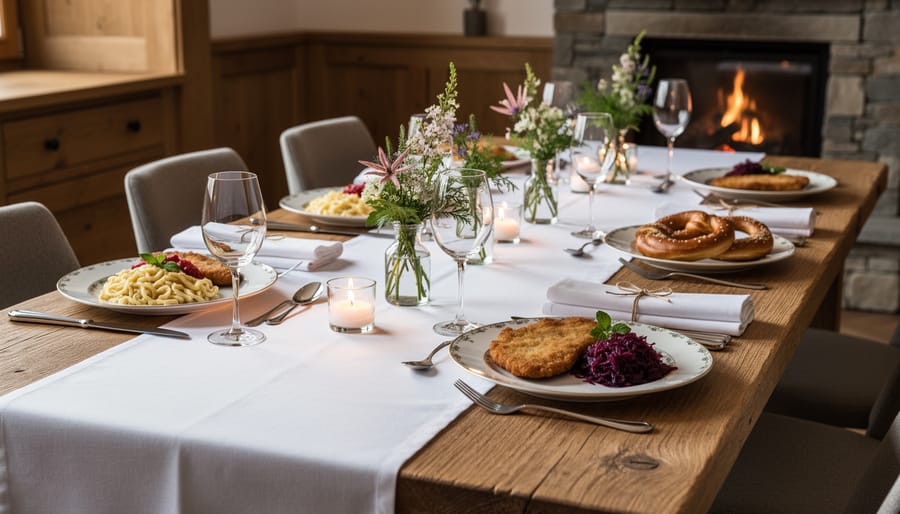
Loreley German Restaurant occupies a converted stone building in Montreal’s Plateau district, just fifteen minutes by metro from downtown, making it the most accessible upscale German dining option in the city. The fourth-ranked spot on our list earns its place through refined execution rather than rustic authenticity alone. Where other nearby German restaurants lean into beer hall energy, Loreley brings Alpine elegance to the table with white linens, candlelight, and a wine program that rivals any French bistro in the neighborhood.
The wine list deserves special attention. Over thirty German bottles appear on the menu, including dry Rieslings from the Mosel Valley, fruity Spätburgunders from Baden, and even rare Eisweins for dessert pairings. The sommelier, trained in the Rheingau, guides diners through selections that challenge the sweet-wine stereotype many Canadians associate with German viticulture. A 2024 Weingut Keller Riesling Trocken paired with pan-seared trout became a personal revelation during my visit.
Chef Andreas Müller reimagines classics without abandoning tradition. His sauerbraten marinates for five days in red wine and juniper, served with buttery spätzle and braised red cabbage that balances sweet and sour perfectly. The rouladen arrives as three neat spirals stuffed with bacon, onions, and pickles, swimming in a rich gravy that begs for bread-dipping. Portions show restraint compared to other German spots, but quality fills the gap.
The chalet-inspired interior features exposed timber beams, alpine murals, and enough separation between tables for private conversation. Bilingual service flows seamlessly between French and English, reflecting Quebec’s cultural duality. German culinary influence runs deeper in Montreal than many realize, dating back to 19th-century immigration waves that established bakeries and delicatessens across the city. Loreley continues that legacy with sophistication befitting a modern, cosmopolitan nearby German restaurant.
5. The Bavarian Inn, Kitchener, ON: Community Cornerstone Since 1968
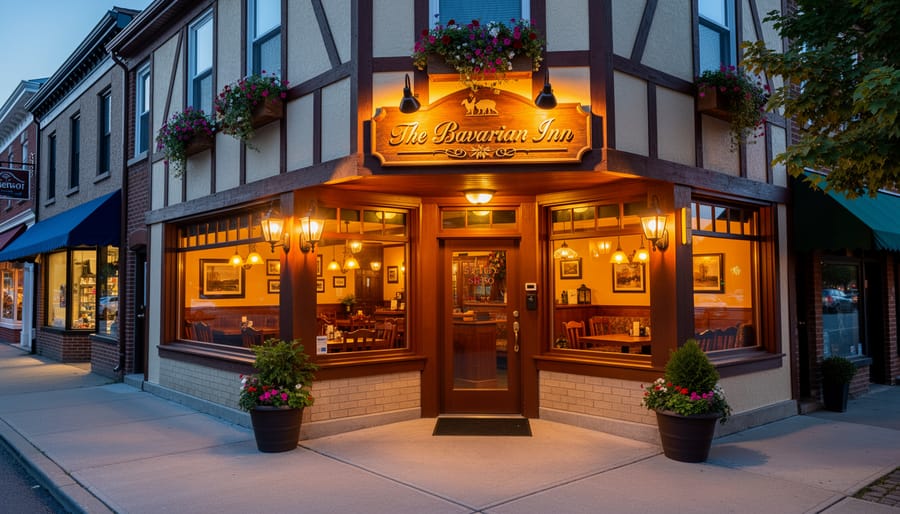
Nestled in the heart of Kitchener, Ontario, The Bavarian Inn has served as a living monument to German-Canadian heritage since opening its doors in 1968. This isn’t just another nearby German restaurant, it’s an institution that helped define what authentic German dining means in Canada’s most historically German city, where nearly 40% of residents claim German ancestry.
The restaurant’s longevity speaks to unwavering quality. Three generations of the founding Schuler family have maintained the same exacting standards for their house-made sausages, preparing bratwurst, knackwurst, and weisswurst daily using recipes brought from Bavaria nearly 60 years ago. The Sunday brunch draws lineups that stretch down King Street, with regulars arriving early for the weisswurst breakfast tradition served before noon, accompanied by sweet mustard and fresh pretzels baked on-site every morning.
What elevates The Bavarian Inn beyond nostalgia is its role as a cultural anchor. Local German-Canadian clubs hold monthly Stammtisch gatherings here, continuing the centuries-old tradition of regular tables where community members share news and maintain linguistic connections. During Kitchener-Waterloo Oktoberfest, the largest outside Germany, the restaurant becomes command central, hosting visiting dignitaries and serving as a gathering point for festival volunteers.
The seasonal menu rotates through regional specialties: asparagus dishes in spring, game preparations in fall, and Christmas stollen available from late November. The dining room retains its original wood paneling and hand-carved chairs imported from Munich, creating an atmosphere that feels earned rather than manufactured. Reservations are essential for weekend evenings, particularly during festival season, though the adjacent biergarten offers walk-in seating when weather permits.
6. Gasthaus Switzerland, Ottawa, ON: Cross-Border Alpine Excellence
Nestled just fifteen minutes from Parliament Hill on Bank Street, Gasthaus Switzerland earns sixth place among nearby German restaurants for its distinctive Alpine approach that bridges German and Swiss culinary traditions. While technically Swiss-focused, the restaurant’s extensive German offerings and shared mountain heritage make it a compelling choice for diners seeking authentic Central European flavors close to downtown Ottawa.
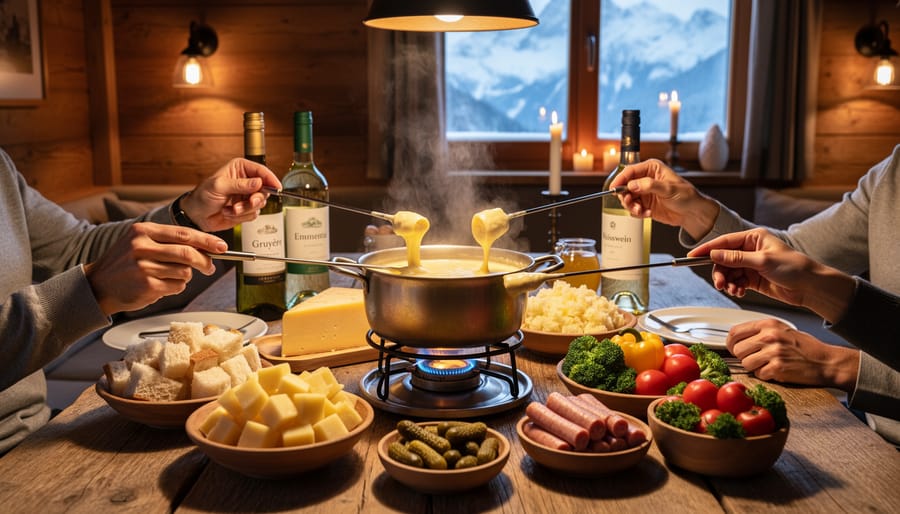
The menu showcases the considerable overlap between German-speaking regions, featuring classics like schnitzel, spätzle, and bratwurst alongside Swiss fondue and raclette. Head chef Thomas Müller, who trained in both Bavaria and Lucerne, sources imported cheeses from German Allgäu and Swiss Emmental producers, creating a cheese board that rivals anything you’d find in the Alps. The house-made Thuringian sausages appear alongside Swiss cervelat, giving regulars difficult choices.
Gasthaus Switzerland’s Wednesday and Saturday fondue nights draw devoted crowds who appreciate the interactive dining experience and the restaurant’s collection of German Rieslings and Swiss Chasselas wines. The raclette service, where melted cheese is scraped tableside over boiled potatoes and pickles, follows traditional Alpine hospitality that feels equally at home in German-speaking Switzerland or southern Germany.
The chalet-inspired interior, complete with exposed wood beams, antler chandeliers, and hand-carved Swiss panels, creates an intimate mountain retreat atmosphere. Large windows overlook a small garden that hosts summer dining under string lights.
Reservations are essential for weekend evenings and fondue nights, particularly during winter months when the cozy space fills quickly. The restaurant accommodates groups up to twelve with advance notice and offers prix-fixe menus for special occasions. Proximity to downtown hotels and the Queensway makes it accessible for both locals and visitors exploring Ottawa’s diverse culinary scene.
7. Old Munich Restaurant, Toronto, ON: Urban Authenticity with a Modern Twist
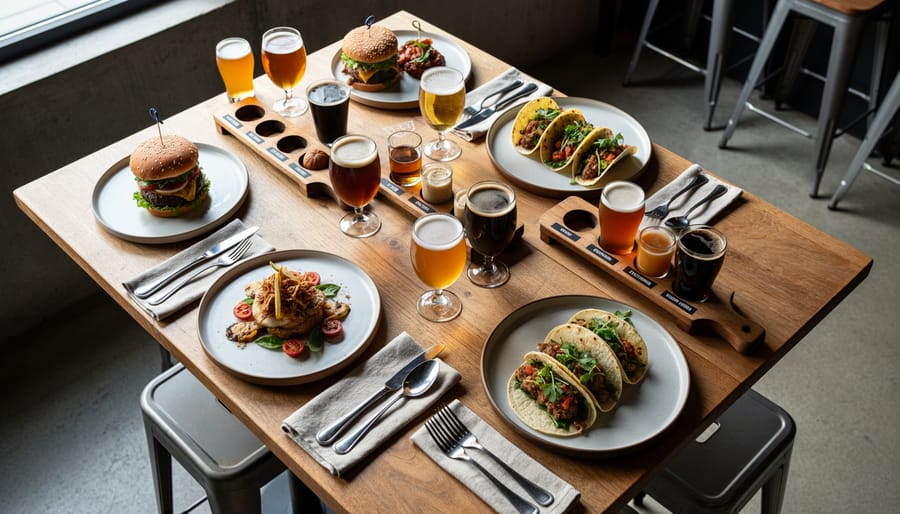
Old Munich Restaurant claims the seventh spot on our list by proving that German cuisine can honor tradition while embracing innovation. Tucked into Toronto’s bustling Leslieville neighborhood, this contemporary eatery draws a diverse crowd of young professionals, curious foodies, and longtime German expats who appreciate its fresh approach to familiar flavors.
The menu changes seasonally, reflecting Chef Andreas Müller’s commitment to local sourcing. You’ll find classics like schnitzel and spätzle year-round, but spring might bring wild ramp spätzle with Ontario morels, while autumn features pumpkin-seed-crusted pork loin with apple-braised red cabbage. The kitchen doesn’t abandon tradition, it simply asks what those recipes might look like if they’d evolved in Canada.
What truly sets Old Munich apart is its craft beer program. Chef Müller has partnered with three Ontario breweries to develop German-style lagers, hefeweizens, and dunkelweizens using Canadian ingredients. The rotating tap list includes a smoked märzen brewed with Ontario malt and a tart Berliner weisse infused with Niagara sour cherries. These collaborations bridge two brewing cultures without diluting either.
“German food doesn’t have to be frozen in time,” Müller told us during our visit. “My grandmother’s sauerbraten recipe is still the base for mine, but I use Ontario beef and finish it with a splash of local ice wine. She’d understand that, cooking has always adapted to what’s available.”
The restaurant sits two blocks from the Dundas streetcar and offers weekend brunch. Reservations are recommended for dinner service, especially Friday and Saturday evenings when the space fills quickly.
Finding Your Perfect Nearby German Restaurant
Choosing the right nearby German restaurant depends on what you’re after. If you want a lively, communal beer hall experience with long tables and hearty portions, lean toward Bavarian spots like Edelweiss Tavern. For something more refined with wine pairings and plated presentations, Alpine-influenced restaurants like Loreley deliver elegance without losing authenticity. Regional specialists matter: Swabian restaurants emphasize spätzle and maultaschen, while Rhineland-focused kitchens might highlight sauerbraten and potato pancakes.
What makes a German restaurant authentic?
Look for house-made staples like spätzle and sauerkraut, imported ingredients (German mustards, pickles, beers), and menus that go beyond schnitzel to include regional dishes like rouladen or schweinshaxe. Staff who speak German and décor reflecting specific regions are good signs.
Do German restaurants in Canada accommodate dietary restrictions?
Many do, especially newer establishments. Vegetarian options like käsespätzle and mushroom schnitzel are increasingly common, and some kitchens offer gluten-free adaptations of bread and dumplings. Always call ahead for vegan or allergy-specific needs.
How much should I expect to spend?
Casual German restaurants typically run $18, $30 per entrée, while upscale spots range $30, $50. Beer hall-style places often have better value on combo platters and weekday specials.
When is the best time to visit?
Weekday lunches offer quieter service and daily specials. Weekends bring live music and festive crowds at traditional taverns, while Oktoberfest season (late September through October) showcases the full cultural experience with special menus and events.
Don’t hesitate to explore beyond the obvious choices. Smaller family-run places often hide the most authentic cooking, passed down through generations and refined by chefs who grew up in Germany. Check for seasonal menus highlighting asparagus in spring or game in autumn, that attention to ingredient timing signals serious commitment to tradition. German culinary culture in Canada is richer than most realize, spanning coast to coast with distinct regional expressions. Your perfect nearby German restaurant is out there, ready to serve you something far better than generic Europan fare.