
How to Cook Morel Mushrooms: From Foraging to Plate in 5 Simple Steps
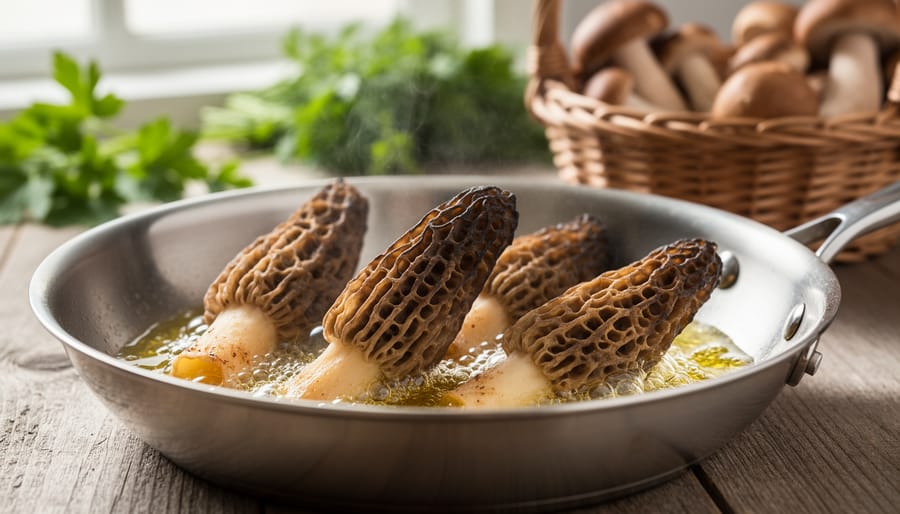
Cooking morel mushrooms properly requires cleaning them thoroughly in cold water, patting dry, and sautéing in butter over medium-high heat for 8 to 10 minutes until golden and fully cooked through. Never eat morels raw or undercooked, as they contain mild toxins that break down only with proper heat. The reward for this careful attention is a deeply earthy, nutty flavor that’s prized across European kitchens, particularly in springtime German and French cooking where these wild treasures appear in cream sauces, schnitzel accompaniments, and rustic forest-inspired dishes.
The honeycomb-textured cap of a morel holds onto dirt and tiny insects, so thorough cleaning isn’t optional. Once prepped, these mushrooms respond beautifully to simple techniques: a hot pan, quality fat, and enough time to drive off their considerable moisture while developing rich, caramelized edges. German cooks have long paired morels with veal, asparagus, and fresh herbs during the brief weeks they’re available, treating them as a seasonal celebration rather than an everyday ingredient. Understanding the basics of safe preparation and proper cooking temperature transforms what can be an intimidating foraged ingredient into a reliable centerpiece for spring meals that honor both tradition and the forest floor.
Understanding Morel Mushrooms: What Makes Them Special
Morels rank among the most sought-after wild mushrooms in the world, prized for their distinctive honeycomb appearance and deep, earthy flavor that transforms simple dishes into something extraordinary. These spring treasures belong to the genus Morchella and colors that range across three main types: black morels with their dark, deeply ridged caps; gray morels with softer, muted tones; and yellow morels sporting golden-blonde honeycomb patterns. Each variety offers subtle flavor differences, though all share that unmistakable nutty, woodsy taste that makes them irreplaceable in European cooking.
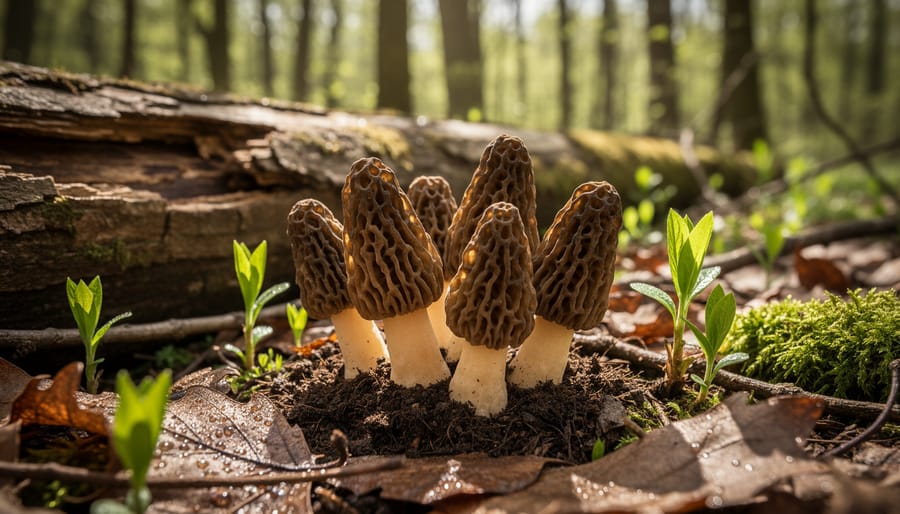
The morel season mid-April to mid-June creates an annual ritual for foragers across North America and Europe, who watch soil temperatures carefully and return to favored spots year after year. Morels thrive in moist hardwood ground, appearing predictably around dying elms and ash trees, near tulip poplars, and, remarkably, in the rich soil of old burn scars in conifer forests where fire has passed through. This brief seasonal window explains why they command premium prices and why experienced cooks make the most of every specimen.
In German culinary tradition, morels have held special status for centuries. Central European forests yield generous spring harvests, and German cooks learned long ago how to coax out the mushroom’s complex flavor through butter-based preparations and cream sauces that complement rather than overwhelm. The mushroom’s meaty texture stands up beautifully to the hearty style of German cooking, pairing naturally with spätzle, schnitzel, and spring herb combinations that define the season’s cuisine.
Tools and Materials You’ll Need
Before you start cooking, gather the right tools to handle these delicate spring mushrooms properly. Having everything ready streamlines the process and helps preserve the morels’ unique texture and flavor from the moment they arrive in your kitchen until they reach the plate.
For cleaning and initial handling, you’ll need a soft-bristled brush or good-quality paper towels to gently remove forest debris and any hitchhiking insects without damaging the honeycomb structure. A breathable container, a paper bag or basket works perfectly, keeps your morels fresh during the critical two-to-three-day window you have before they must be cooked or preserved. Plastic bags trap moisture and accelerate spoilage, so avoid them entirely.
When it comes time to cook, a sharp knife is essential for slicing morels lengthwise to check for hidden insects and to create even pieces that cook uniformly. A well-seasoned cast iron skillet or heavy-bottomed pan distributes heat evenly, preventing hot spots that can burn delicate mushrooms before they’re cooked through. The heavy base also holds temperature when you add the morels, maintaining the steady heat needed for proper sautéing.
- Cleaning: soft brush or paper towels, breathable storage container (paper bag or basket)
- Cooking: sharp knife, cast iron or heavy skillet
- Optional preservation: food dehydrator set to 145°F, airtight containers for dried morels
- German-inspired pantry staples: butter, heavy cream, fresh parsley and chives, white wine, sea salt
If you want to extend your morel season beyond the brief spring harvest, a food dehydrator becomes invaluable, it transforms fresh morels into shelf-stable treasures you can rehydrate throughout the year. On the ingredient side, keep butter, heavy cream, fresh herbs like parsley and chives, and a decent white wine on hand. These staples form the backbone of traditional Central European preparations that let morels shine without overwhelming their earthy, nutty character.
Safety First: What You Must Know Before Cooking Morels
Before you drop that first morel into the pan, understand this: these mushrooms demand respect. Their culinary rewards come only when you handle them correctly, and cutting corners on safety can turn a prized ingredient into a serious health risk.
Raw morels contain hydrazine compounds that break down only with heat. Sautéing for at least three to five minutes isn’t just about texture; it’s about making these mushrooms safe to eat. Undercooking them leads to nausea, vomiting, and dizziness that can last hours.
If you didn’t forage them yourself, source morels from established markets, trusted foragers, or specialty grocers who can verify their origin. True morels have a distinctive honeycomb cap that’s completely attached to the hollow stem. False morels (Gyromitra species) have wrinkled, brain-like caps and can contain monomethylhydrazine, a rocket fuel component that’s toxic even when cooked.
Once you’ve confirmed you have genuine morels, inspect each one for hitchhikers. Insects love the honeycomb structure. Gently brush off any visible debris with a soft brush or paper towel. Don’t soak them in water before storage or you’ll end up with soggy, flavorless mushrooms. A quick rinse just before cooking is sufficient to dislodge any remaining grit. Slice larger morels lengthwise to check the hollow interior for hidden insects, and you’re ready to cook them safely.
Step-by-Step: How to Clean and Prepare Fresh Morels
Cleaning morels properly is the essential first step that preserves both their delicate flavor and your enjoyment of them. The honeycomb structure of morel caps traps forest debris, insects, and dirt, but the porous tissue also soaks up water like a sponge, which dilutes flavor and makes them soggy. That’s why you do not wash before storage and handle them gently from the moment you bring them home.
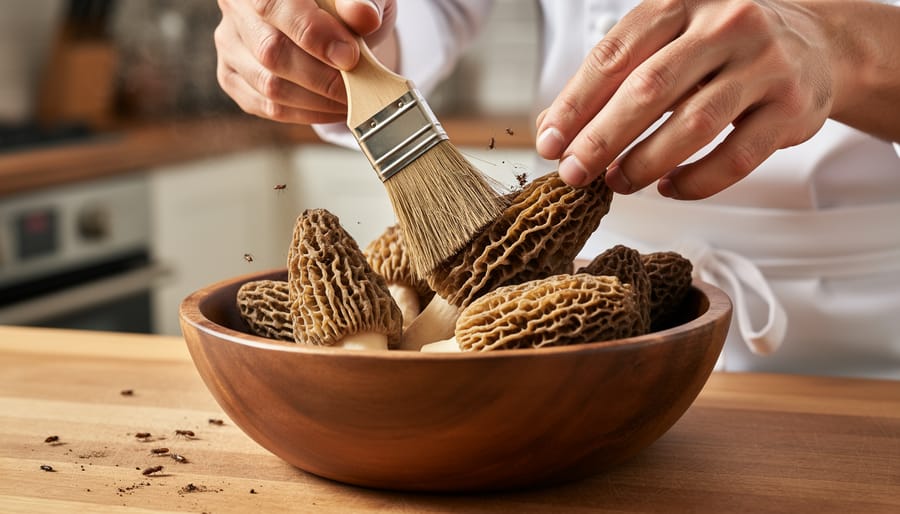
Start by inspecting each mushroom as soon as possible after purchasing or foraging. Hold each morel up to the light and look inside the hollow stem and cap for small insects, slugs, or visible dirt. Tap the mushroom gently over a bowl or sink, often this dislodges anything hiding in the crevices. If you spot stubborn debris or insects, use a soft-bristled brush or dry paper towel to sweep them away with light strokes. Work carefully around the ridges and pits rather than scrubbing hard, which can tear the delicate flesh.
Here’s the complete cleaning and prep sequence:
- Inspect each morel visually, checking inside the hollow cavity and between ridges for insects or forest debris.
- Tap the mushroom gently over a bowl to dislodge anything loose, then brush with a soft brush or paper towel if needed.
- Store uncleaned morels in a breathable container, never plastic, lined with paper towels in the refrigerator for up to two to three days maximum.
- Just before cooking, rinse briefly under cool running water if any grit remains, then pat dry immediately with clean towels.
- Slice larger morels lengthwise through the stem to expose the hollow interior, both for a final inspection and to ensure even cooking.
That final rinse happens only minutes before the morels hit the pan. You want them as dry as possible going into the skillet so they brown rather than steam. Slice lengthwise through the stem and cap to create halves or quarters depending on size, this exposes any hiding spots you might have missed and gives you uniform pieces that cook at the same rate.
Cooking Methods: Bringing Out the Best in Your Morels
Pan-Sautéing: The Classic Method
Heat a cast iron or heavy-bottomed skillet over medium-high heat and add a generous knob of butter, about two tablespoons per half-pound of morels. Let the butter melt until it foams and the foam subsides, signaling it’s ready. If you prefer a lighter approach, substitute with a neutral oil or a mix of butter and oil to prevent scorching.
Add your cleaned, halved morels to the pan in a single layer, cut side down if possible. Resist the urge to stir immediately. Let them sit undisturbed for three to four minutes so the surfaces develop a golden-brown crust and release naturally from the pan. You’ll hear a gentle sizzle, not a violent sputter, if the pan smokes or the butter darkens quickly, lower the heat.
Toss the morels once or twice, then continue cooking for another four to six minutes total. They’ll shrink slightly and release moisture as they cook. This liquid should evaporate in the pan, concentrating the earthy, nutty flavor rather than steaming the mushrooms into sogginess.
You’ll know they’re done when the edges turn golden and crisp, the interiors feel tender but not mushy when pierced with a fork, and the pan is nearly dry. The color deepens from pale tan to a rich caramel brown. Season with salt and a crack of black pepper only at the end, salting too early draws out moisture and prevents proper browning.
Pull the pan off the heat and serve immediately. Properly sautéed morels should taste meaty, woodsy, and faintly sweet, with none of the raw chalkiness that signals undercooking.
Pairing Morels with German-Inspired Flavors
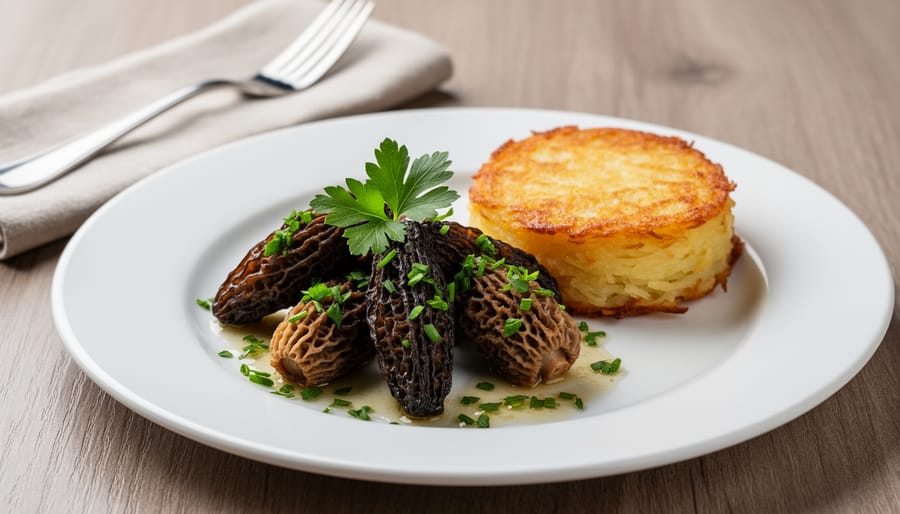
Morels have held a place of honor in German spring cooking for generations, when foragers would bring back their wild harvests to be transformed into elegant cream-based dishes. The earthy, nutty flavor of morels pairs exceptionally well with the butter and cream that form the foundation of many traditional preparations. A simple cream sauce, heavy cream reduced with a splash of white wine, fresh parsley, and a pinch of salt, allows the mushroom’s complex flavor to shine while adding luxurious richness.
Fresh herbs are essential. Parsley and chives, staples in German food basics brighten the earthy morels without overwhelming them. Chop them finely and add just before serving to preserve their fresh bite. Spätzle makes an ideal vehicle for morels in cream sauce, its tender egg noodles soaking up every bit of the mushroom-infused liquid. Some cooks fold sautéed morels directly into the spätzle dough for an even more decadent result.
When serving morels alongside schnitzel, keep the preparation straightforward. Sauté the mushrooms in butter with a touch of shallot, then deglaze the pan with dry white wine or a light Riesling. The acidity cuts through the richness of both the breaded cutlet and the mushrooms. Understanding German-inspired snacks and side dishes helps you build a complete spring meal around your morels.
The cream used in these dishes reflects the quality you find in German dairy traditions, full-fat, minimally processed, and allowed to develop its natural sweetness. In Bavaria and Swabia, families would celebrate the brief morel season with Sunday dinners centered on these wild treasures, treating them as the delicacy they truly are.
Other Cooking Techniques Worth Trying
Beyond the classic pan-sauté, morels adapt beautifully to other cooking methods that highlight their earthy depth. Roasting concentrates their flavor, toss halved morels with olive oil, a pinch of salt, and fresh thyme, then roast at 400°F for 15 to 20 minutes until the edges crisp and caramelize. The dry heat intensifies their nutty character without the butter richness of sautéing.
Morels also shine in soups and sauces, where their woodsy essence infuses the entire dish. Add sliced morels to a classic German cream soup base with chicken stock and a splash of white wine, or fold them into a velouté to serve over spätzle. For mushroom soup ideas that incorporate seasonal vegetables, morels bring a spring forest note that lifts lighter broths.
Stuffing is another German tradition worth exploring. Larger morels can be gently hollowed and filled with a mixture of breadcrumbs, herbs, and grated cheese, then baked until golden. This preparation turns each mushroom into a savory bite that feels both rustic and refined, perfect for a special spring meal.
Preserving Your Morels: Dehydrating for Year-Round Use
Fresh morels spoil fast, within just two to three days in the refrigerator. Dehydrating transforms your spring bounty into a pantry staple that lasts months, letting you enjoy morels well beyond their fleeting season. The process concentrates their earthy flavor while preserving the texture that makes them special.
- Clean your morels thoroughly using the dry brushing method, removing all debris and insects. Slice larger morels in half lengthwise so they dry evenly.
- Arrange the morels in a single layer on dehydrator trays, leaving space between pieces for air circulation. Avoid crowding.
- Set your dehydrator to 145°F and leave it running overnight. This temperature ensures thorough drying without cooking the mushrooms.
- Check the morels after eight to twelve hours. They’re ready when they snap cleanly rather than bend, with no moist spots remaining.
- Let the dried morels cool completely before storage. Pack them in airtight glass jars or vacuum-sealed bags, keeping them in a cool, dark place.
Properly dried morels stored this way will keep for six months to a year. When you’re ready to use them, rehydrate by soaking in warm water for twenty to thirty minutes. The soaking liquid becomes a rich mushroom broth, strain it through a coffee filter to remove grit, then add it to sauces or soups for an extra layer of flavor. Some German cooks prefer rehydrating in chicken stock or white wine for even more depth. The rehydrated morels won’t have quite the same texture as fresh, but they bring that distinctive earthy taste to winter stews, cream sauces, and spätzle dishes when spring feels impossibly far away.
How to Tell Your Morels Are Perfectly Cooked
Perfectly cooked morels undergo distinct transformations that tell you they’re ready. Fresh morels start with a spongy, almost rubbery texture and muted coloring, but as they cook through, they darken noticeably, black morels deepen to near-charcoal, while yellow and gray varieties take on richer, more pronounced tones. The honeycomb ridges firm up slightly and lose their raw bounce.
Watch for these key doneness indicators:
- Color shift: Morels darken one to two shades from their raw appearance
- Moisture release: A light sheen of liquid appears in the pan as internal water cooks out
- Texture change: Caps feel tender but still hold their shape when pressed with a spatula
- Aroma development: A deep, earthy fragrance replaces the mild raw mushroom smell
- Edge browning: Ridges develop light golden-brown spots in butter or oil
Undercooked morels retain a spongy, squeaky bite and pale coloring, which is not just unpleasant but unsafe, raw morels contain compounds that cause gastric distress. Overcooked specimens turn limp and leathery, their delicate flavor muted to a bitter, dried-out shadow. The sweet spot takes five to seven minutes in a hot pan: the caps should yield to gentle pressure but spring back slightly, and a test bite reveals a meaty, tender texture without any raw chew.
Frequently Asked Questions
Cooking morel mushrooms raises a handful of practical questions, especially for first-timers. Here are answers to the most common concerns that come up once you’ve brought these prized wild mushrooms home.
Can you eat morel stems?
Yes, morel stems are entirely edible and have the same earthy, nutty flavor as the caps. Just trim away any dried or damaged portions at the base before cooking.
Why shouldn’t you wash morels before storing?
Morels are porous and absorb water quickly, which accelerates spoilage and turns them slimy in storage. Clean them with a soft brush or paper towel and rinse only immediately before cooking.
How long do cooked morels last?
Cooked morels keep in the refrigerator for three to four days in an airtight container. Their texture softens slightly, but they’re still excellent reheated or folded into omelets and pasta.
Can you freeze morels?
Fresh morels don’t freeze well, they become mushy when thawed. For long-term storage, dehydrate them at 145°F until crisp, then rehydrate as needed throughout the year.
One question that puzzles many home cooks is whether the three color types, black, gray, and yellow morels, behave differently in the kitchen. All three share the same core flavor profile and texture, though some foragers insist blacks taste slightly earthier and yellows a bit milder. In practice, the difference is subtle enough that you can cook any type using the same techniques. What matters more is freshness: morels begin losing moisture and flavor within two to three days of harvest, regardless of color. If you’re lucky enough to find a mix, treat them identically and focus on getting them from basket to pan while they’re still firm and fragrant.
These answers cover the essentials, but don’t hesitate to trust your senses. Morels that smell off, feel slimy, or show dark spots should be discarded. When in doubt, err on the side of caution, the brief spring season means there’s always next year to refine your technique.
Cooking with morel mushrooms connects you to a centuries-old tradition that reaches from the forests of Central Europe to your modern kitchen. These wild treasures appear for just six weeks each spring, demanding respect for their fleeting season and careful attention to safety and technique. Whether you sauté them simply with butter and herbs or incorporate them into traditional German cream sauces and spätzle, morels reward your effort with an earthy complexity that can’t be replicated. Visit German restaurants during spring to try morels in restaurants and see how chefs interpret this prized ingredient, then bring those inspirations home to your own experiments. The brief window for fresh morels makes each meal an occasion worth savoring.